
ABSTRACT
This article explains the importance of fabrication and erection quality and practical application of Fitness For Purpose (FFP) as per API 579 and BS 7910. Two real site case studies are shared from author’s 25+ years experience.
1. INTRODUCTION
Fabrication and erection are the backbone of Oil & Gas, Refinery and Petrochemical construction. Fabrication in workshop as per IFC drawings and erection at site must be perfectly coordinated. Quality at fabrication stage decides erection success. ASME B31.3, AWS D1.1 and API standards guide us.
2. COMMON CHALLENGES
Dimensional mismatch, repeated welding defects, restraint stresses, material and consumable issues are daily challenges for QA/QC.
3. WHAT IS FITNESS FOR PURPOSE (FFP)?
FFP as per API 579-1/ASME FFS-1 and BS 7910 is engineering assessment to decide if a flaw is safe for intended service. FFP is not compromise, it is engineering decision.
4. CODE vs FFP
ISO 5817 gives workmanship criteria. FFP gives service-specific safety assessment.
5. PRACTICAL CASE STUDIES FROM MY 25 YEARS EXPERIENCE
5.1 CASE STUDY-1: REPEATED HOT PASS CRACK DUE TO IRREGULAR PIPE SUPPORT
In one piping project, we had repeated hot pass cracking in same joint three times. WPS, welder, preheat, electrodes all were correct. After each grinding and repair, crack came again. During observation, *one helper noticed one end of pipe support was irregular*. Pipe was not resting uniformly, creating heavy restraint and bending load on the hot pass.
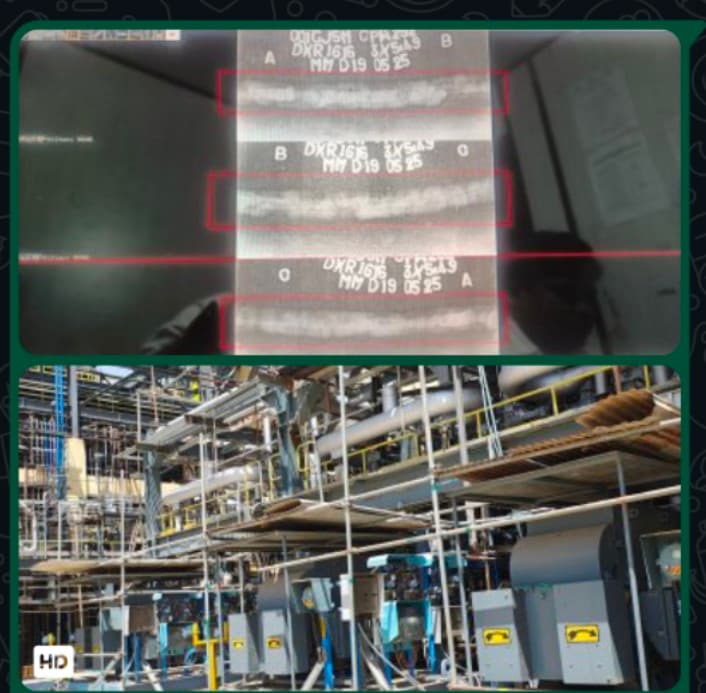
We corrected the support, made pipe level and stable, welded again with same WPS and same welder – no crack. Joint passed RT.
*Learning:* Not all defects are welding related.
Check support, restraint and erection condition.
Look beyond the weld pool.
5.2 CASE STUDY-2: WELDING CONSUMABLE REJECTION AFTER CHEMICAL FAILURE AS PER ASME SEC II PART C
In another structural project, two experienced welders complained welding was very hard, arc was unstable and slag removal was difficult. As two welders reported same issue, I did not ignore. We made a fillet weld sample, found poor performance, verified MTC again and sent electrode sample for chemical test to approved lab. Lab result showed *Carbon content was more than specification limit of ASME Sec II Part C*. That was root cause of hard weldability.
Based on approved lab report, *we quarantined full lot, called electrode manufacturer, warned them and rejected the lot from site*. We implemented additional chemical testing for next lots.
*Learning:* Listen to welders. Experienced welder’s feedback is an early warning system. MTC is not final. Independent lab verification as per ASME Sec II Part C is our responsibility as QA/QC.
6. ROLE OF QA/QC IN FFP
QA/QC must document defect, investigate root cause (not only welding), collect data, and coordinate with design for FFP assessment via TQ/Concession.
7. CONCLUSION
Good QA/QC is not about only rejecting. It is about finding root cause – sometimes it is support, sometimes it is consumable chemistry. FFP gives us engineering tool to take safe, economical decisions. These two cases prove that site observation and listening to welders and helpers can solve major quality issues.
REFERENCES
1. API 579-1 / ASME FFS-1 2021
2. BS 7910:2019
3. ASME Sec II Part C, Sec IX, B31.3
4. ISO 5817:2023

.png&w=3840&q=75)